
Well, another first blog post. It’s been a long time coming, but nothing seems to make it less awkward and weird. How do you even do this?!
Well, for starters, I’m Jaycee Rodgers. I’ve been wanting to start a blog for a while now because I have had Inflammatory Breast Cancer for 3 years as of yesterday, December 2, 2025. When I was diagnosed, I was 30 years old, never been married, and didn’t have children.
Don’t start feeling sorry for me or anything, though. I might have been a late bloomer, but I was on my way. I got engaged in 2019, but we had to cancel our wedding in 2020 because of the sudden COVID chaos. My fiancé also had a beautiful 10-year-old daughter whose life I played an active role in.
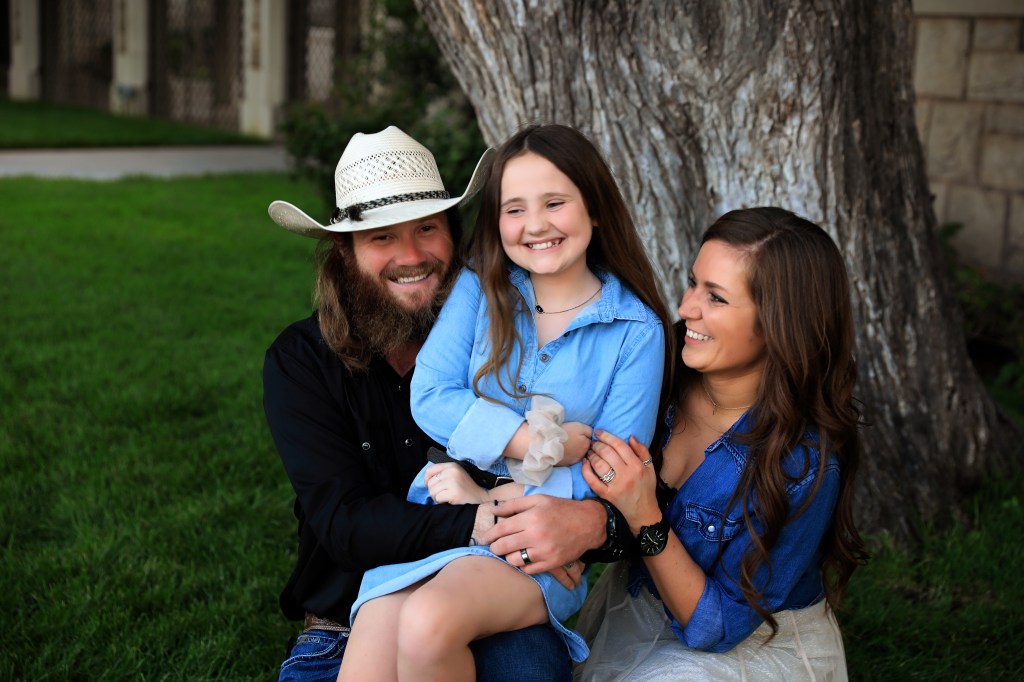
There we are. One happy little family.
This picture was taken the year before I was diagnosed. Cancer wasn’t ravaging my body yet, and instead, I was actively hunting for a job after just graduating with my paralegal degree. I had a passion for family law after my parents dragged me in and out of court during their custody battle for my little brother that lasted 7 years.
What’s most interesting about my story is the cancer itself: Inflammatory Breast Cancer (IBC). A rare, aggressive form of the most common cancer that plagues American women (excluding skin cancers). So what separates IBC from breast cancer? Here’s a quick breakdown.
Breast Cancer
- Presents as a lump in the breast, but other symptoms may occur
- Caused by cancer cells coming together to form a mass or tumor in breast tissue
- Often detected on a screening mammogram
- Can be found and treated in the very early stages of the disease
- Prognosis in early diagnosis – 99% ; Distant metastasis – 90%
Inflammatory Breast Cancer
- Presents with redness, swelling, and warmth on the skin of the breast
- Caused by cancer cells blocking the lymphatic vessels in the breast skin
- Rarely seen in mammograms, and a biopsy is required for confirmation
- Difficulty in getting an accurate diagnosis leads to it only being discovered in later stages
- Prognosis – 80% ; Distant – 40%
So that’s what makes IBC a separate diagnosis. Statistically, none of you will ever need to know about it. Only 1-3% of breast cancer patients will get the diagnosis. Most people have never even heard of the disease.
But that’s not what led me down a rabbit hole and raised a lot of questions about how many coincidences can be related before it’s no longer coincidence.
The really intriguing part is that I’m the 6th person in my immediate family to get diagnosed, and none of us have had the same cancer.
So the purpose of wanting to write a blog is to share everything I’ve found on why that is.
And boy, I can guarantee you aren’t ready for what I’ve found. There are twists and turns, surprises, negligence, and betrayals that you don’t want to miss.
Join the e-mail list to be notified when I add a new post,
or subscribers get access to the next part one week early!
 The Big B Word
Leave a comment